
Monkey Mobile Arena
Dumitru BoicoAdventure
4.1531.00 Reviews
- Version
- 5.2
- Installs
- 5.00M
- Age Rating
- Teen
Screenshots



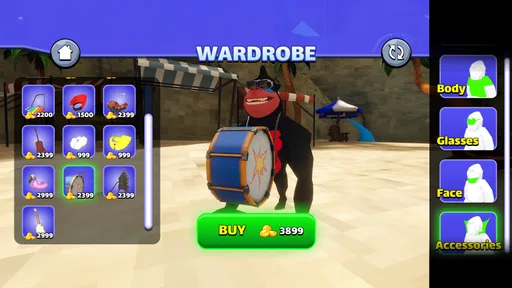

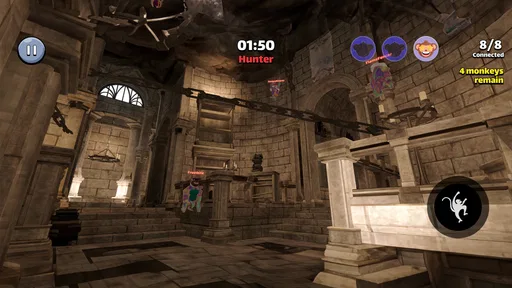


Our Review of Monkey Mobile Arena
 Analysis by Appyee
I spent time with Monkey Mobile Arena as a quick, competitive adventure game built around one simple idea: stay away from the other players while trying to keep control of the round. It is an online multiplayer tag game from Dumitru Boico, and its appeal is easy to understand within a few matches. You are not being asked to learn a complicated story or manage a large collection of systems. The focus is movement, awareness, and the pressure of knowing that another player is actively trying to catch you.
That simplicity is both its strongest feature and its main limitation. I can recommend it to someone who wants short bursts of multiplayer action on a phone, especially when a traditional adventure game feels too slow. I would be more cautious with it if you want a deep solo campaign, a carefully developed narrative, or a game that rewards long-term planning more than moment-to-moment reactions. The free entry point makes trying it straightforward, but the real question is whether this particular style of chase remains entertaining after the novelty wears off.
How the free entry point affects its value
The game is free to download, which gives it a useful advantage over paid mobile adventures: you can test the central experience without committing money first. That matters here because tag games are very dependent on personal taste. Some players enjoy the immediate tension of being pursued; others quickly find repeated chases too narrow. A free starting point lets you make that decision through play rather than through screenshots or a short store description.
There are in-app purchases ranging from $1.99 to $29.99 per item. I would treat those purchases as optional spending rather than part of the basic admission price. The important distinction is that the game can be approached as a free multiplayer experience, while any additional spending should be judged separately. If you are comfortable playing without buying anything, the initial value is clear: you get to see whether the chase format fits you before opening your wallet.
I would not describe it as a bargain simply because it is free. Free access removes the purchase barrier, but it does not automatically make every minute worthwhile. The value depends on how often you enjoy short online matches and whether the game’s particular rhythm gives you enough variety. Someone who plays only occasionally may get good value from a few rounds during a break. Someone looking for a large adventure to explore over weeks may feel that the free access does not compensate for the narrower premise.
My advice is to begin with a strict no-purchase approach. Play enough to decide whether you enjoy the chase itself, not whether a paid item might make the experience feel more comfortable. If the basic loop does not hold your attention, spending more will not solve the underlying problem. If you do enjoy it, you can then decide whether optional purchases add something meaningful for your own style rather than buying out of impatience.
The kind of value the game actually delivers
The strongest value comes from immediacy. A tag match needs very little explanation: identify the danger, move away, watch the surrounding action, and look for an opening. That makes the game approachable for players who do not want to study a complicated control scheme before having fun. It also makes it suitable for social situations where several people want to try something quickly without learning a long list of rules.
What I like most is the way the simple objective changes how I use my attention. In a standard action game, I might focus on attacking enemies or collecting resources. Here, I am constantly reading distance and direction. A safe-looking route can become a trap when another player changes position, and a moment of hesitation can matter more than a flashy move. That creates a compact form of suspense that works well on a mobile screen.
The adventure label is worth understanding in practical terms. This is not the kind of adventure game I would choose for a story, puzzle chain, or long journey through a detailed world. Its adventure character comes from movement and pursuit. If your idea of adventure means reacting to unexpected situations and trying to escape pressure, it can fit. If you expect exploration, dialogue, or a solo progression arc, the category may set the wrong expectation.
It also works as a low-commitment alternative to more demanding multiplayer games. I do not need to prepare a build, memorize a large map, or spend a long session before I feel involved. That makes it useful when I have a few spare minutes and want interaction rather than a passive distraction. The trade-off is that the same accessibility may feel limited to players who prefer layered strategy, character development, or a wider range of objectives.
Three practical ways to get more from each match
My first useful habit was to stop treating every escape as a straight sprint. The obvious reaction is to run away from the nearest threat, but that can make your movement predictable. I get more from the game when I vary my direction and avoid committing too early to one route. The point is not to invent a complicated strategy; it is to make decisions based on what is happening around me instead of reacting automatically.
A second tip is to use the opening moments to observe rather than panic. When several players are moving at once, the most dangerous person is not always the one closest to you. A slightly more distant player may be approaching from the direction you planned to use. I try to scan the immediate situation before choosing an escape line. This small pause often gives me a clearer decision than rushing toward the first apparently open space.
Third, I find it better to judge a session by decision quality than by a single result. Tag games can turn quickly, and one unlucky encounter can make a short match feel worse than it was. After a round, I ask whether I misread a route, moved too predictably, or ignored another player’s position. That mindset makes the game more useful for improving awareness and less frustrating when the outcome is not in my favor.
These habits are not hidden buttons or secret systems; they are ways of approaching the game that the short store summary does not explain. They also show why the experience can appeal to different players. A beginner can enjoy the basic chase immediately, while a more competitive player can create a personal challenge around positioning, timing, and reading other people.
Where the trade-offs become noticeable
The central loop is focused, so repetition is the first limitation I would mention. If the pleasure of being chased is enough for you, that focus can feel clean and satisfying. If you need frequent changes in objectives, a developing story, or a growing set of activities, the same focus may become predictable. I would not install it expecting a broad adventure package; I would install it for the specific tension of multiplayer tag.
Online play also changes the experience from one session to another. Your enjoyment depends partly on the people sharing the match and on how comfortable you are with competition. A player who likes direct interaction may find that unpredictability exciting. A player who prefers complete control over the pace may find it frustrating. This is one reason I would not compare it directly with a fully offline adventure: the two games serve different moods.
Another trade-off is the difference between free access and paid value. The free version is the sensible way to evaluate the game, but the presence of purchases means I would pay attention before buying anything. I would want to know exactly what an item changes for my experience and whether it improves convenience, appearance, or something more central to play. Since purchase value is personal, my recommendation is to avoid assuming that a higher-priced item is automatically better value than simply continuing to play for free.
The Teen content rating is also relevant when deciding who should use it. I would not treat the game as an automatic choice for young children just because the rules are easy to understand. Parents should consider the online multiplayer setting and the child’s comfort with competitive play. For teenagers and adults who enjoy quick chases, the rating is less of a concern than whether they want an online game with a narrow, repeatable objective.
Performance expectations and device fit
The current version is 5.2, and the game supports devices running Android 8.0 or later. That makes the compatibility requirement important when recommending it to someone with an older phone or tablet. I would check the operating system before planning to play, particularly if the device has been kept for several years. Meeting the minimum system requirement does not guarantee that every device will feel equally comfortable, so screen responsiveness and general device condition still matter in practice.
I prefer playing a game like this when I can give it my full attention for a few minutes. Because the action depends on noticing other players and responding quickly, it is not ideal for a situation where I am constantly switching between apps or dealing with interruptions. A quiet break, a commute with a stable connection, or a short wait can work well. A crowded moment where I can barely focus is more likely to make the game feel unfair, even when the issue is my attention rather than the design.
I would also recommend keeping expectations realistic about what a mobile tag game can provide. It is a convenient form of active play, not a replacement for a large console-style adventure. The smaller commitment is the point. If I want a story that remembers my choices or a world that rewards slow exploration, I choose another kind of game. If I want to make a few quick decisions against human opponents, this format is more appropriate.
Who is most likely to get good value
This is a good fit for players who enjoy pursuit games, short competitive sessions, and simple rules that leave room for personal tactics. It can also suit someone introducing a friend to mobile multiplayer because the main idea is easy to explain. The free price makes that first experiment less risky, and the online format gives the game more energy than a purely solo chase against predictable computer behavior would offer.
I can especially see it working for a player who likes improving through observation rather than collecting equipment. You can set personal goals such as surviving longer, choosing less obvious routes, or staying calm when several players are nearby. Those goals create extra depth without requiring the game to pretend it is a complex role-playing adventure. That is a genuine strength, provided you enjoy making your own challenges.
I would suggest skipping it if your priority is a substantial narrative, offline reliability, or a large range of modes. It is also not my first recommendation for someone who dislikes online competition or becomes frustrated by repeated defeats. A puzzle adventure would be a better alternative for deliberate problem-solving, while a story-driven game would better serve someone who wants characters and progression. The right comparison is not “which game is bigger,” but “which kind of attention do I want to spend?”
For an everyday example, imagine having a short break after work or school and wanting something more active than scrolling. I could start the game, play a few rounds, and put it away without needing to remember a complicated plot or prepare a long session. On another day, if I am tired and want a calm experience, the same pressure to watch movement and avoid opponents may feel like work. That flexibility is useful, but it depends heavily on my mood.
My final recommendation
Monkey Mobile Arena succeeds when it stays close to its central idea. I find the chase format easy to understand, quick to enter, and capable of creating real tension through simple movement choices. Dumitru Boico has built a game that is more about reading the moment than managing a large collection of systems. Its free access makes it worth trying, particularly for people curious about online multiplayer tag.
Its limitations are just as clear. The focused loop may not provide enough variety for players who expect a full adventure, and online competition is not equally enjoyable for everyone. I would also separate the free experience from the optional purchases: try the game first, decide whether the basic matches hold your attention, and only then consider spending between $1.99 and $29.99 on an item.
With a 4.1 average from around ten thousand ratings and more than five million installs, it has attracted a substantial mobile audience, but those figures should not replace personal testing. My own verdict is a qualified recommendation: download it if you want a free, fast multiplayer chase game and enjoy improving through awareness and movement. Skip it if you are looking for a deep solo journey or a broader set of adventure systems. The best value here is the chance to test a distinctive multiplayer idea at no upfront cost.
For the right player, that is enough. I would keep it available for short sessions, social play, and moments when I want immediate competition without a long setup. I would not make it my only adventure game, and I would not buy anything until the free experience had already earned a regular place in my routine.
Privacy and Permissions
See what permissions an app requests and how it handles your data.
- Microphone
- record audio
- Other
- view network connections, pair with Bluetooth devices, full network access, change your audio settings, control vibration, prevent device from sleeping, Google Play license check
Verdict
Strengths of Monkey Mobile Arena
- Fast-paced matches are easy to start and finish during short breaks.
- Simple controls make the game accessible for casual players.
- Competitive matches provide a strong reason to keep improving.
- Bright visuals and playful character designs give it a friendly style.
- Regular multiplayer action keeps the experience more engaging than solo play.
Limitations of Monkey Mobile Arena
- Matchmaking quality may vary depending on the time of day and player pool.
- Online play can be frustrating when opponents have much more experience.
- The colorful presentation may feel repetitive after extended sessions.
- Progression can become slower once the early rewards are completed.
- A stable internet connection is essential for a smooth multiplayer experience.
Other Releases by Dumitru Boico
View All
Gorilla Skins for Monkey Arena
Personalization3.9

Mods for GoreBox
Events1.8

Mods for Dmod
Libraries & Demo3.2
Similar Picks in This Category
View All
Roblox
Roblox Corporation4.2

Pokémon GO
Niantic, Inc.3.5

Ninja warrior: legend of adven
TOH Games4.6

Ninja Arashi
Black Panther4.6

Eyes - The Horror Game
Fearless Games sp. j.4.5

Critical Action:Gun Strike Ops
FPS Shooter & Action Game4.3
Frequently Asked Questions
What is Monkey Mobile Arena?
Monkey Mobile Arena is a mobile multiplayer game centered on fast-paced arena battles featuring playful monkey characters. Players typically compete in short matches, use different abilities or power-ups, and try to outscore or defeat opponents. Before downloading, check the current app description because available modes, characters, objectives, and online features may vary between updates or regional versions.
Does Monkey Mobile Arena require an internet connection?
Because Monkey Mobile Arena is designed around arena-style multiplayer gameplay, an internet connection may be required for matchmaking, account synchronization, leaderboards, and other online functions. Some menus or practice features could work offline, but you should not assume that full gameplay is available without internet access. A stable Wi-Fi or mobile-data connection is recommended.
Is Monkey Mobile Arena free to download and play?
Monkey Mobile Arena may be available as a free download, but the game can include optional in-app purchases, advertisements, premium items, character upgrades, or other monetized content. Free access does not necessarily mean every feature is unlocked immediately. Review the store listing and your device’s purchase settings before installing, especially if children may use the device.
Is Monkey Mobile Arena suitable for children?
The colorful monkey-themed presentation may appeal to younger players, but suitability depends on the game’s official age rating, chat functions, advertising, and purchase options. Parents should review the permissions and store classification before allowing access. If the game offers online communication or competitive interactions, parental controls and restricted purchasing can provide additional protection.
What devices are compatible with Monkey Mobile Arena?
Compatibility depends on the version of Monkey Mobile Arena available for Android or iOS. Before downloading, verify the required operating-system version, available storage, device performance, and whether the game supports your region. Arena games may run poorly on older phones because of graphics, network activity, or background processes, so keeping the system updated can help avoid crashes and connection problems.
Play our best games!


